Who should pursue the CFA?
CFA suits anyone aiming for a career in investment management, equity research, portfolio management, investment banking or related finance fields. Student profile includes those pursuing or completed graduation, pursuing or completed post graduation and working professionals
What are the eligibility requirements for CFA?
You need to be within 23 months of completing your bachelor's degree to register for CFA Level 1. No specific field of study is required, and SkilledGrad accepts CFA students in Chennai from commerce, engineering, science and arts backgrounds.
How many exam windows are there per year?
CFA Level 1 is offered four times a year, in February, May, August and November. Level 2 is offered three times, in May, August and November. Level 3 is offered twice, in February and August. SkilledGrad helps you plan which window makes the most sense for your timeline.
How long does it take to complete all 3 CFA levels?
On average candidates take 2.5 to 4 years to complete all three levels, depending on pass rates and exam windows. SkilledGrad's preparation in Chennai is structured around improving first attempt outcomes.
Can I do CFA while working full-time?
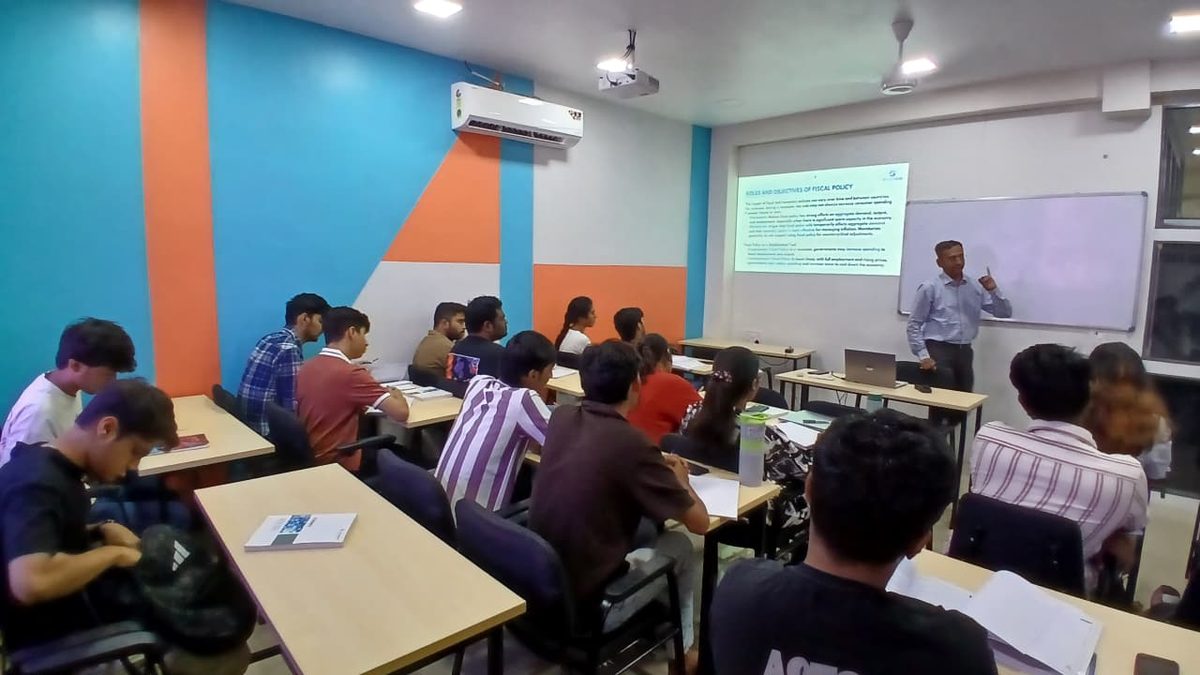
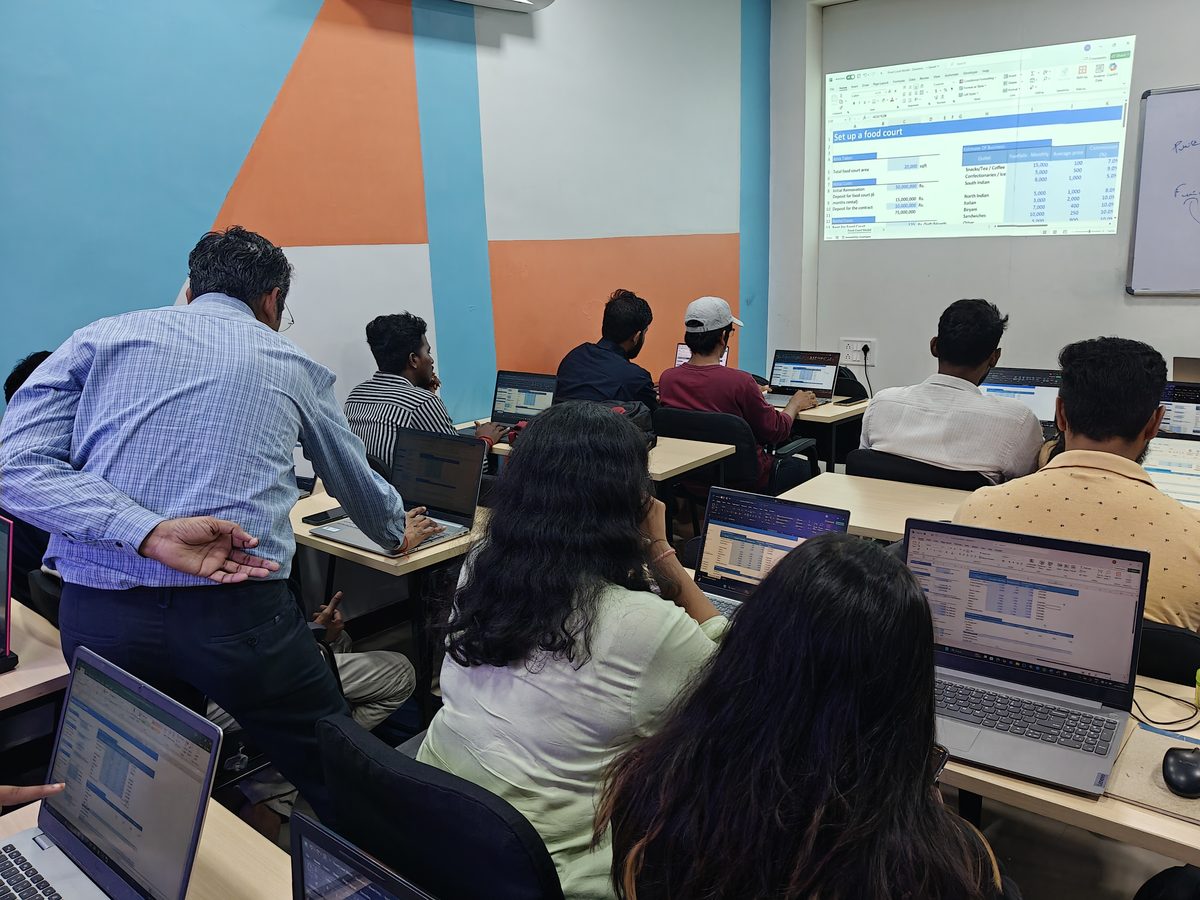
Yes. SkilledGrad runs weekday and weekend CFA batches, 2 to 4 days a week, at our Purasaiwakkam and Tambaram centres in Chennai, designed for working professionals and college students alike. Many of our students have cleared CFA Level 1 while working full time.
What makes SkilledGrad's CFA coaching different?
SkilledGrad's CFA coaching in Chennai differs in three ways. First, faculty with real investment banking experience at global banks, not only academic trainers. Second, constant evaluation. Third, placement support aimed squarely at core finance roles rather than back office operations.
What are the CFA exam fees?
CFA Institute fees: Level 1. Early Registration $1,140, Standard $1,490. Level 2, Early $1,140, Standard $1,490. Level 3, Early $1,240, Standard $1,590. These are CFA Institute fees, separate from SkilledGrad coaching fees.
Can I start CFA right after 12th standard?
CFA Level 1 requires you to be a graduate, within 23 months of your graduation month, or to hold equivalent qualified work experience, so a 12th pass student cannot register. The practical route is to enrol in any bachelors degree such as B.Com or BBA and start training alongside it, so you are ready to write the exam as soon as you can register. SkilledGrad in Chennai runs batches built around that timeline.
Do I need a commerce or maths background? I'm from engineering or arts.
No. CFA has no subject prerequisite, and engineering graduates are a large and growing share of Indian candidates. In our experience engineering and science students find quantitative methods, derivatives and fixed income comfortable. Arts and non-commerce students usually need some groundwork on accounting fundamentals before FSA makes sense. A matter of a few weeks, not a barrier, and something SkilledGrad covers directly in our Chennai batches.
Is CFA actually worth it in India, or only useful abroad?
It is genuinely useful in India, but the value concentrates in specific roles. India is now among the largest CFA markets globally, and the roles that reward the charter cluster in investment management, equity research, credit research, risk and portfolio management. If your target is general corporate finance or accounting, CFA is not the most efficient route and ACCA or CA may serve you better. Be sceptical of any page showing Goldman Sachs salary tables without mentioning those roles are few and largely in Mumbai and Bengaluru.
What CFA jobs actually exist in Chennai?
Chennai is a secondary but real CFA market, and its shape differs from Mumbai's. A Chennai-based candidate should not expect Mumbai front-office outcomes, but there is a genuine and expanding base of analytical finance roles here, and Level 1 or Level 2 is a meaningful differentiator. Compensation typically runs somewhat below Mumbai and Bengaluru for comparable roles.
Will clearing Level 1 alone get me a job?
Not on its own, and you should be sceptical of anyone who says otherwise. Level 1 is a credible signal on a fresher's CV but does not function as a qualification, and competition among Level 1 candidates is high. To stand out you need demonstrable skills alongside it and a clear intent to complete the qualification. This is why SkilledGrad pairs CFA coaching in Chennai with Financial Modelling & Valuation and placement support.
How hard is CFA really, and what are the pass rates?
Level 1 pass rates have run between roughly 39% and 50% in recent sessions, against a long run average near 40%. Two patterns from CFA Institute's own data are worth knowing before you register: first-time candidates outperform deferred candidates substantially, so deferring is correlated with failing; and the commonly cited preparation benchmark is 300+ hours per level, which candidates who materially undershoot tend to know.
Do I need coaching, or can I self-study?
Self-study genuinely works for some candidates and it is cheaper. It tends to work when you are focused, can filter out the right advice, and have some head start in the investment industry. Coaching tends to earn its cost when you are studying alongside a degree or a job, or when you know you need a fixed schedule and someone expecting you on Sunday morning. The failure mode of self-study is rarely misunderstanding the material, it is inconsistency. SkilledGrad's Chennai batches are structured around that problem.
CFA or CA, which should I choose?
They lead to different careers, so the real question is which career rather than which is harder. Choose CFA if you aspire to work in the investment management industry, in profiles like investment banking, equity research, credit research, portfolio management etc. CFA is a focused course for the investment industry, while CA / ACCA gives you wider coverage with profiles in accounting, auditing, taxation, law and finance.
CFA or an MBA in finance?
CFA is far cheaper and narrower; an MBA is far more expensive and broader, and its main product is often the network and placement process rather than the syllabus. Against a top-tier institute the MBA usually wins on placements. Against a mid-tier private programme, CFA gives you a better return on investment. A number of candidates from top MBA colleges who intend to work in the investment industry pursue CFA alongside their MBA.
Is there a CFA exam centre in Chennai?
Yes. CFA exams are computer-based and delivered at proctored test centres, with centres in Chennai among the Indian locations. The centre availability is allocated when you schedule your exam, not when you register, so scheduling promptly after registering matters.
Can I prepare for CFA while doing my degree or a full-time job?
Yes, and most Indian candidates do. Pursuing CFA alongside a degree is the easier of the two and arguably the best time to do it. Alongside a full-time job it is harder but manageable if you are disciplined, and you need to budget 12 to 15 hours a week. SkilledGrad runs weekday and weekend CFA batches at both our Purasaiwakkam and Tambaram centres in Chennai, specifically so that studying alongside work or college stays realistic.